Skip to content
Navritto

The Midnight Line

Thrillers & SuspenseTeens & Up · 13+35-minute read28 pages
📖 Download Story

Chapter One — The 11:59

The fight had no big words in it. That was the worst part.

Later, Asha would try to remember one cruel thing her mother had said — one line sharp enough to explain why a seventeen-year-old was standing at a railway station at midnight with a bag on her back. There wasn’t one. There was only a long, tired silence, and then her mother rubbing her eyes and saying, very quietly, “Do what you want, Asha. I’m too tired to stop you.”

And underneath the words Asha had heard the thing she had always been most afraid was true — that stopping her was not worth the trouble. That she could go, and the flat would only be quieter, and no one would really mind.

It had not always been like this. But her mother worked nights now, at the hospital, and slept in the day, and the two of them had slowly become two people passing in a doorway, too tired to say much that was not about money, or school, or the tap that would not stop dripping. That evening her mother had come off a double shift grey to the lips, and had still stood at the stove and made the rice the way Asha liked it, and had said, “There’s food in the pan.” And Asha, full of the fight, had not eaten it. She had heard only the tiredness in her mother’s voice, and not the four small words underneath it — the ones it had taken the very last of her mother’s strength to say.
So she did what she wanted.

She waited until the flat went dark and her mother’s breathing turned slow. She took the money from the tin on the shelf, and her phone charger, and one change of clothes. She opened the front door onto the fog, stepped out into it, and pulled the door shut behind her — softly, because even now, even leaving, she did not want to wake anyone.

No one called her name. No light came on behind her. She stood on the step for a moment and listened — longer than she meant to, long enough that the cold of the fog reached in through her coat — and the flat stayed dark and silent behind the shut door, and she told herself that this was the proof of it. If anyone had wanted her to stay, they would have got up. They would have come to the door. No one came to the door.

She hitched the bag onto her shoulder and walked into the fog.

The fog had come up off the river and swallowed the whole town. The streetlamps floated in it like drowned moons. She could not see the end of her own street.

The station was three roads away. She knew the walk with her eyes shut; she had grown up close enough to the line to fall asleep every night to the sound of trains. But the fog made it strange tonight — longer, quieter, wrong. Her own footsteps sounded like a second pair, half a step behind her own, and twice she stopped to listen, and twice there was nothing at all but water dripping off the wires and her heart going too fast.

The last train was the 11:59. After it, nothing until morning. She had checked the time a hundred times on the walk, holding her phone up in the fog, as though the number might change its mind and leave her stranded on the wrong side of the night.

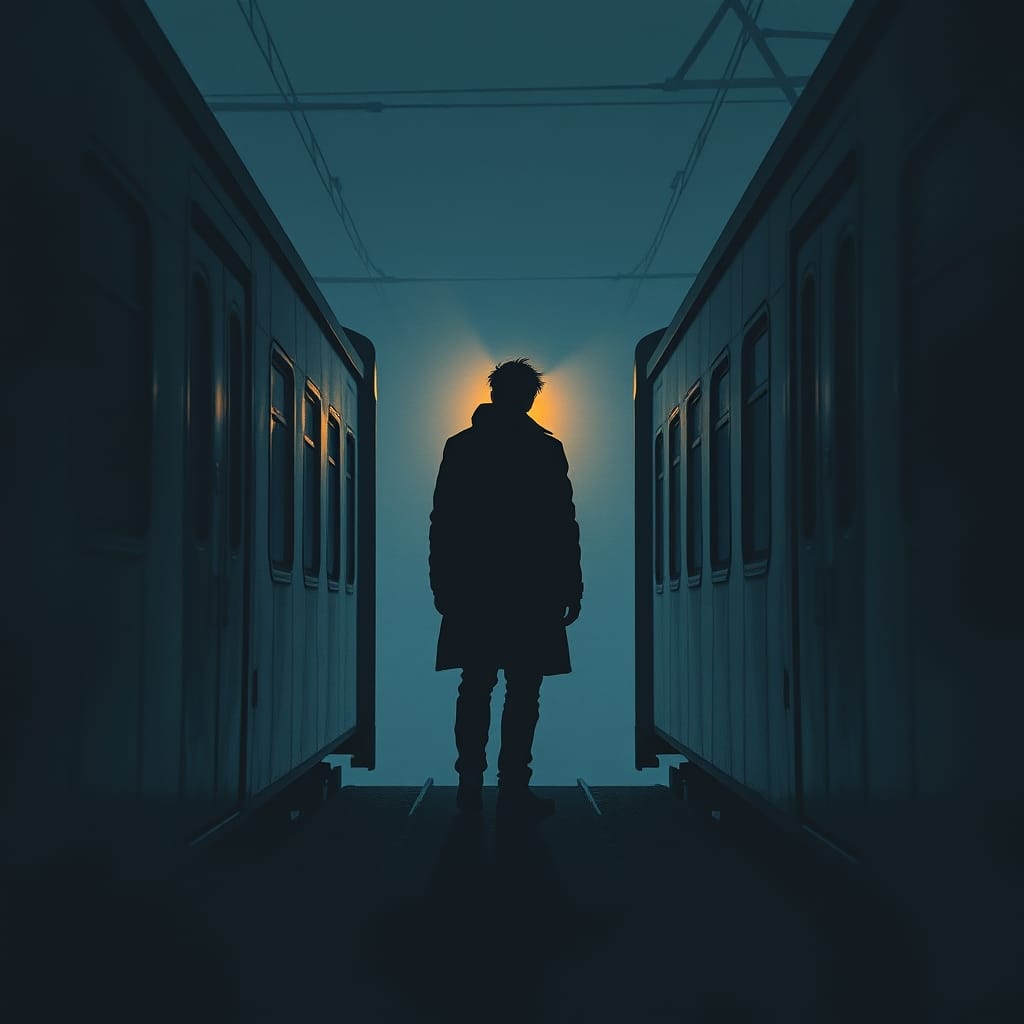
The platform was empty.

One long strip of wet concrete under a single buzzing light, the fog pressing in at both ends so that the world simply stopped, ten steps away, in either direction. Hers were the only footprints on it.

She set her bag down and, because there was no one anywhere to see her do it, she took the bracelet out of her coat pocket. It was a thin silver thing, small enough for the wrist of a child, because she had been a child when her mother clasped it on her — the good year, the year before the night shifts, when her mother still had time to sit on the edge of the bed and talk until Asha fell asleep. She had worn it until it would not close around her wrist anymore. Then she had kept it in a box. And tonight, at the very last minute, she had taken it out of the box and slipped it into her pocket without letting herself ask why.

She held it out over the edge of the platform, over the black gap where the rails were. One small drop, and the last thread would be cut. Open your hand, she told herself. Open your hand and let it fall and be free of all of them.

She could not open her hand. She stood there hating herself for it — and then she pushed the bracelet back down into her pocket and closed her fist tight around it, and that was the exact moment the lights of the train came sliding out of the fog.

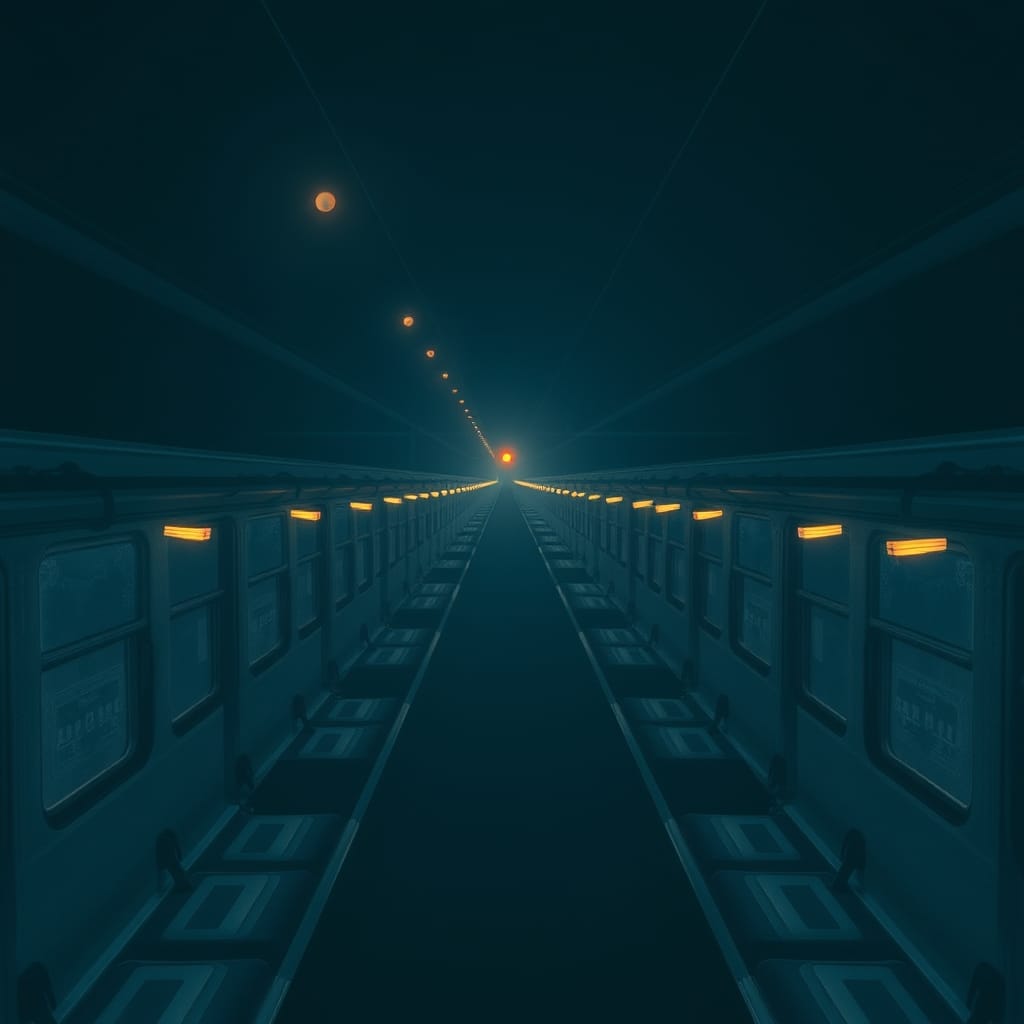
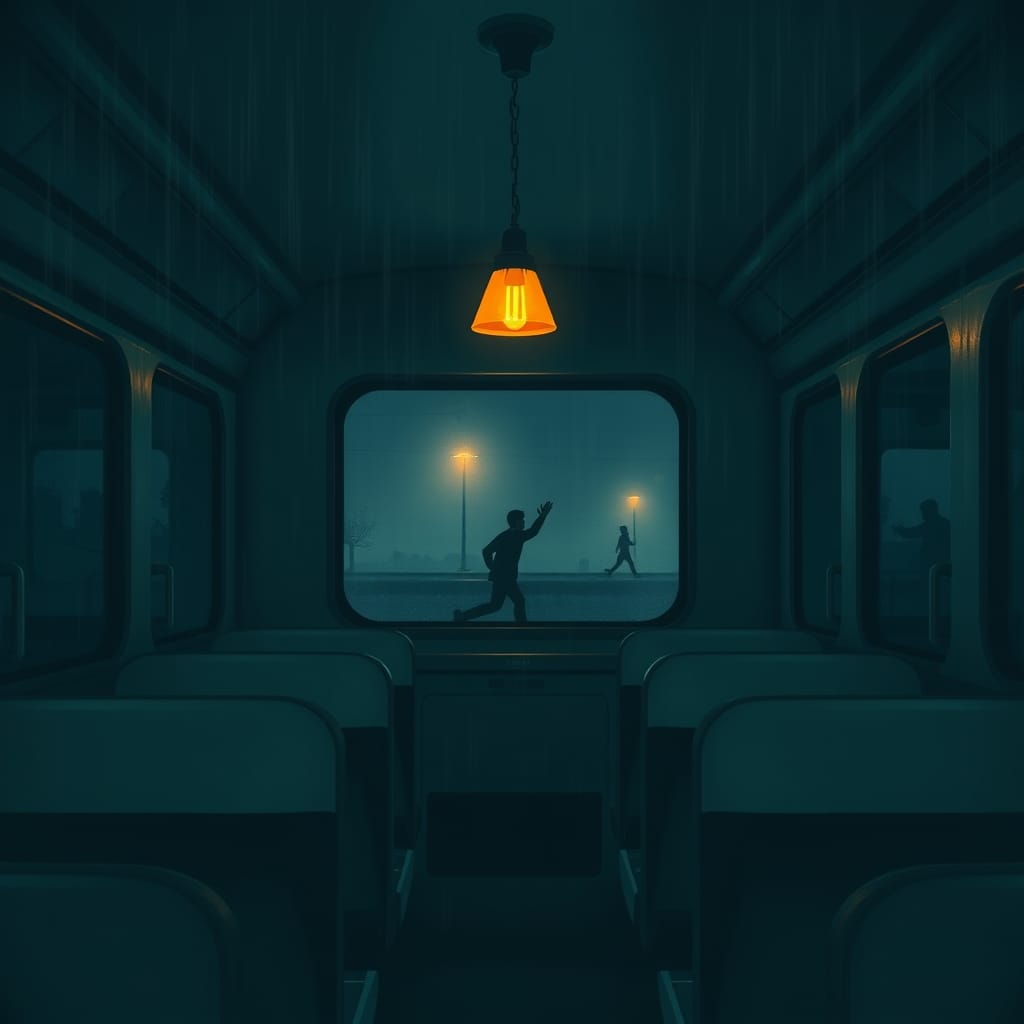
The 11:59 came in slowly, and quietly, and far longer than she remembered the trains being — carriage after carriage sliding past her in the fog, most of them dark, until one drew up in front of her with its door already open and its inside light burning, warm and yellow and completely empty.

She got on. The door hissed shut behind her. The carriage ran empty from end to end: two long rows of empty seats, and a single light hanging from the ceiling that swung, very slightly, side to side, though there was no wind inside the train to move it.

The train pulled out. The platform slid away into the fog — and Asha, looking back through the black window at the place she was leaving, saw, for half a second and no more, a figure. Someone on the platform. Running. Running after the train with one arm flung up and their mouth open, as if calling something after her.

Then the fog folded over the glass and there was nothing there at all. A porter, she told herself. A drunk. A trick of the last light. No one was running for her; no one even knew that she was gone. She turned her back on the window, and she did not look at it again.

Chapter Two — The Name on the Glass

For a while, the train was almost kind.

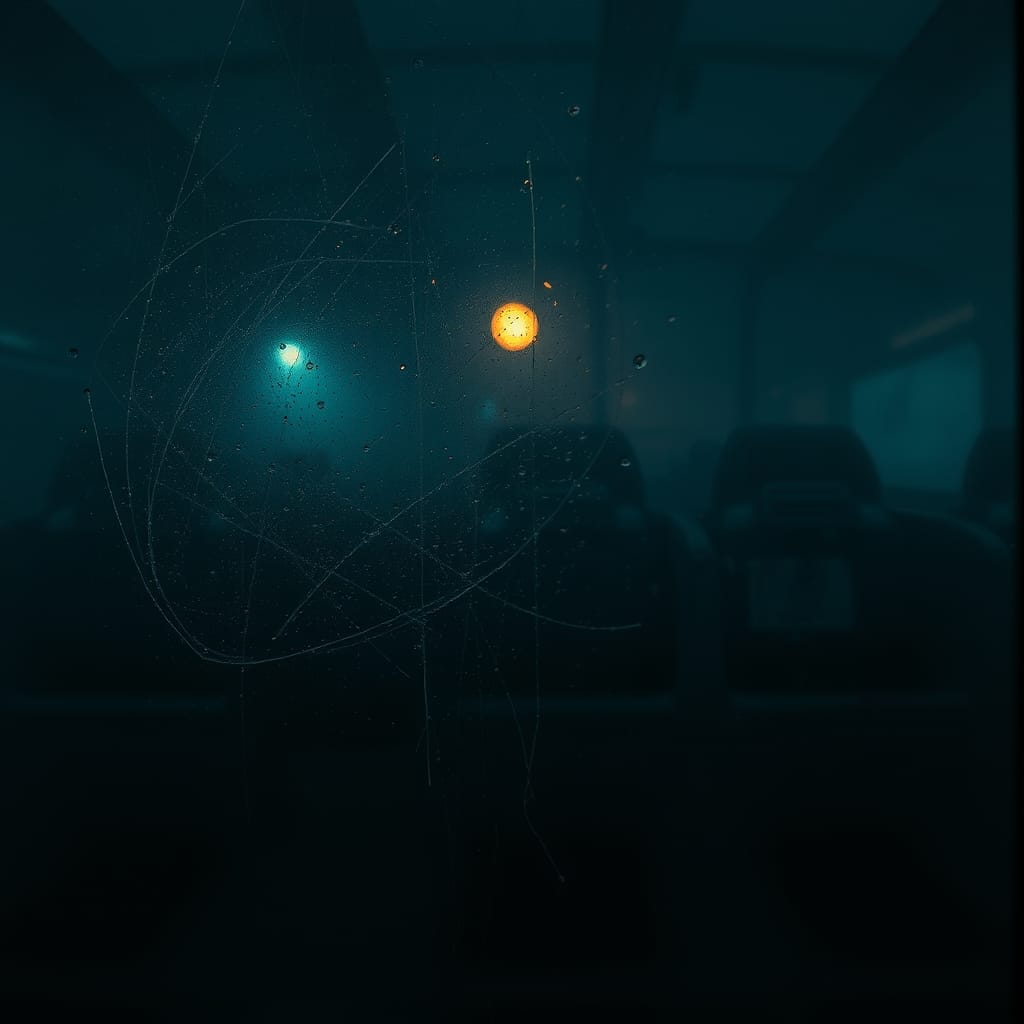
It rocked her the way trains do, gently, side to side, the wheels keeping a slow heartbeat under the floor. The cold crept up through the seat, and she moved once — a few rows down, away from a thin draught leaking in around the door at the end — and she drew her knees up, and rested her head against the window, and watched the dark go by.

She did not mean to sleep. She had meant to stay awake the whole way, to watch every station slide past and count them down, and get off in the city and vanish into it before anyone could — she did not finish the thought. The rocking took it gently out of her hands. Her eyes closed.

In the almost-dream she was small again, and her mother was humming somewhere in the next room, and the trains went by the window one after another, and none of them ever stopped, and that was all right, because there was nowhere she had to be and no one she had to leave. Then a wheel shrieked on a curve, and she woke.

Screen 1 of 5