Skip to content
Navritto

The Twenty-Sixth Door

Mystery & the StrangeAll Ages✦ 6-minute read6 pages
📖 Download Story

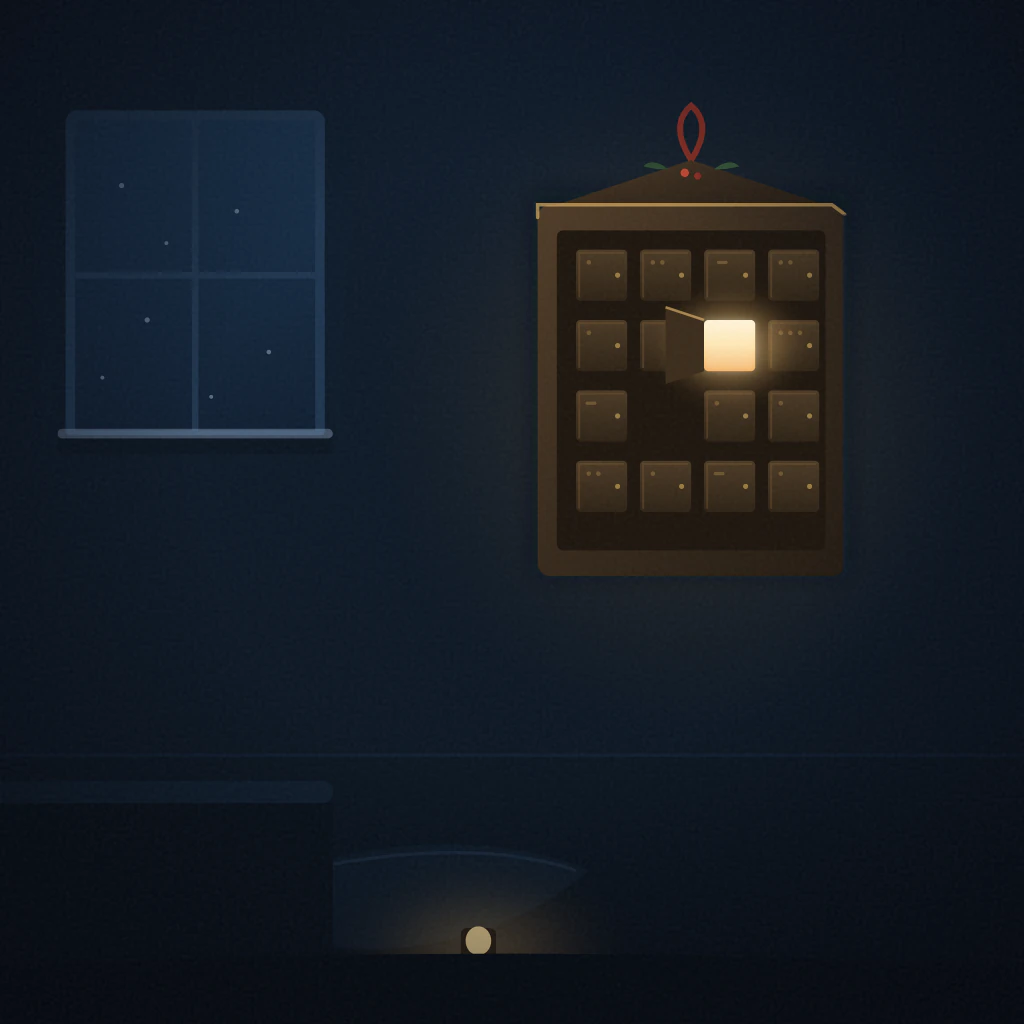
Every December the same calendar hangs on my wall, older than me, older than my mother, its little wooden doors worn soft at the corners. One door for each day until Christmas — twenty-five in all — and behind each one a small something: a sugared almond, a tin star, a folded paper boat. By Christmas morning every door stands open, and the calendar is spent, and that, I always thought, was the end of it.

On the night after Christmas the room was quiet the way only that night is quiet, when all the waiting is over and there is nothing left to count down to. My nightlight threw its small warm coin against the floor. I looked at the finished calendar on the wall, every door hanging open, and I fell asleep certain there was nothing left in it to find.
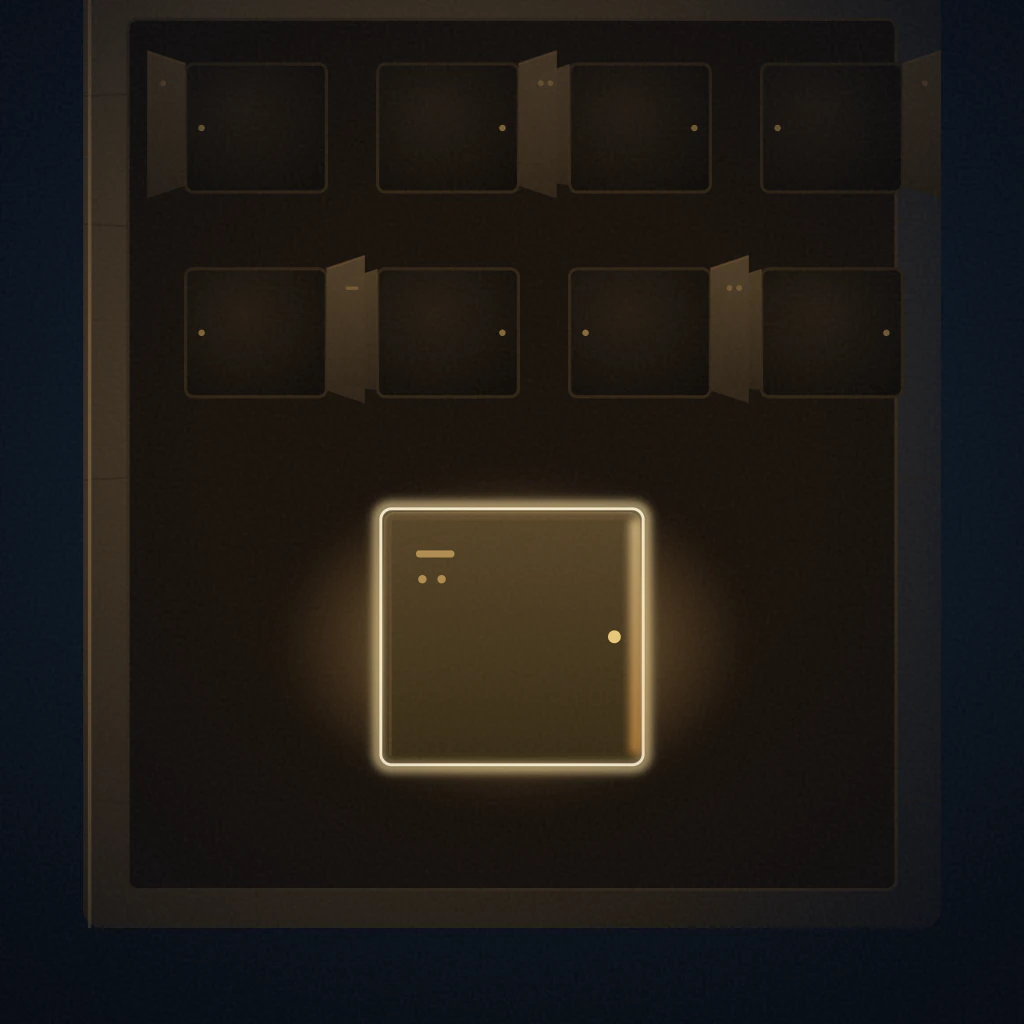
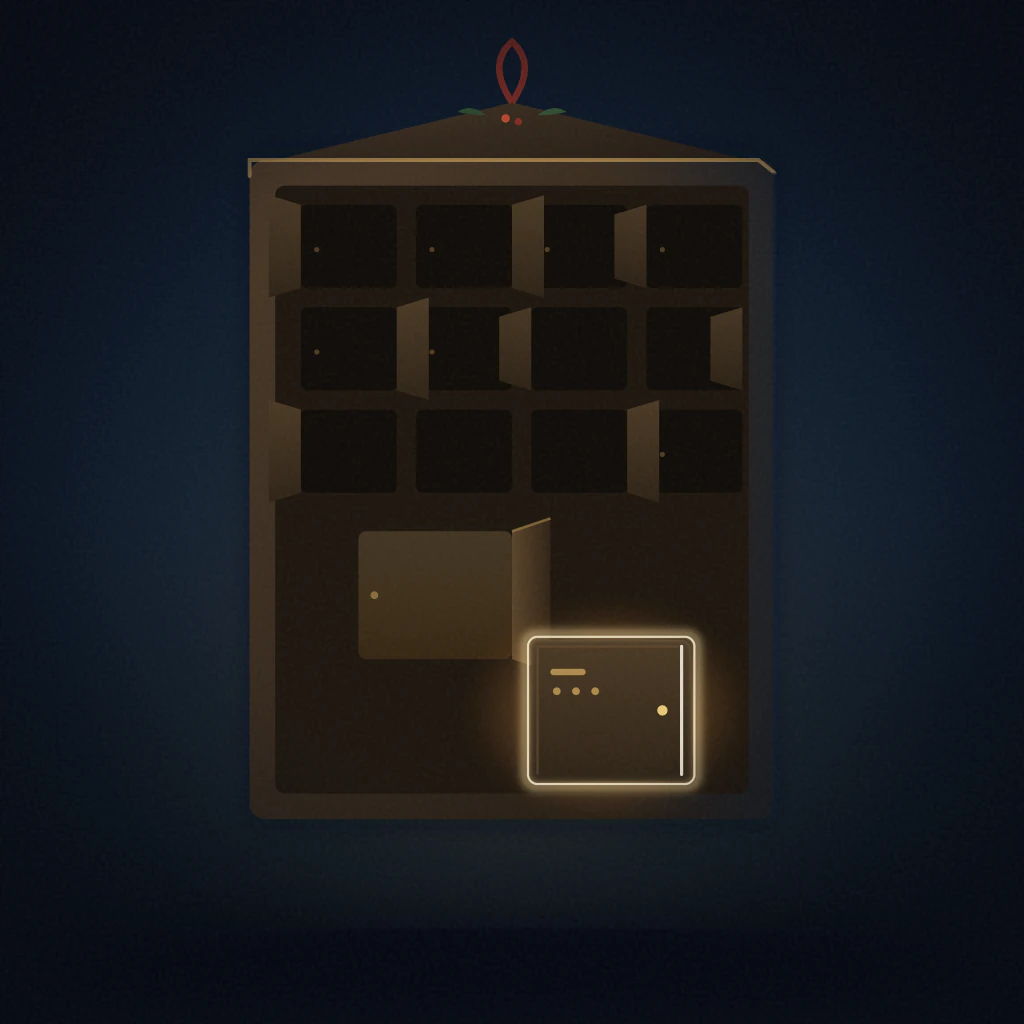
I woke in the blue dark before anyone else, the way you do on the morning after a holiday, and the first thing I saw was that the calendar was wrong. Below the last row of little open doors, where there had only ever been smooth old wood, there was a twenty-sixth door. It had a tiny knob and a tiny hinge and a mark I couldn't quite read, and it was closed.

It was glowing. Not much — just a thread of warm light leaking out around all four of its edges, the way light leaks under a door when someone is still awake in a dark house. Twenty-five doors is all the calendar had ever had. I counted them twice to be sure. Then I counted the twenty-sixth, which could not be there, and was.

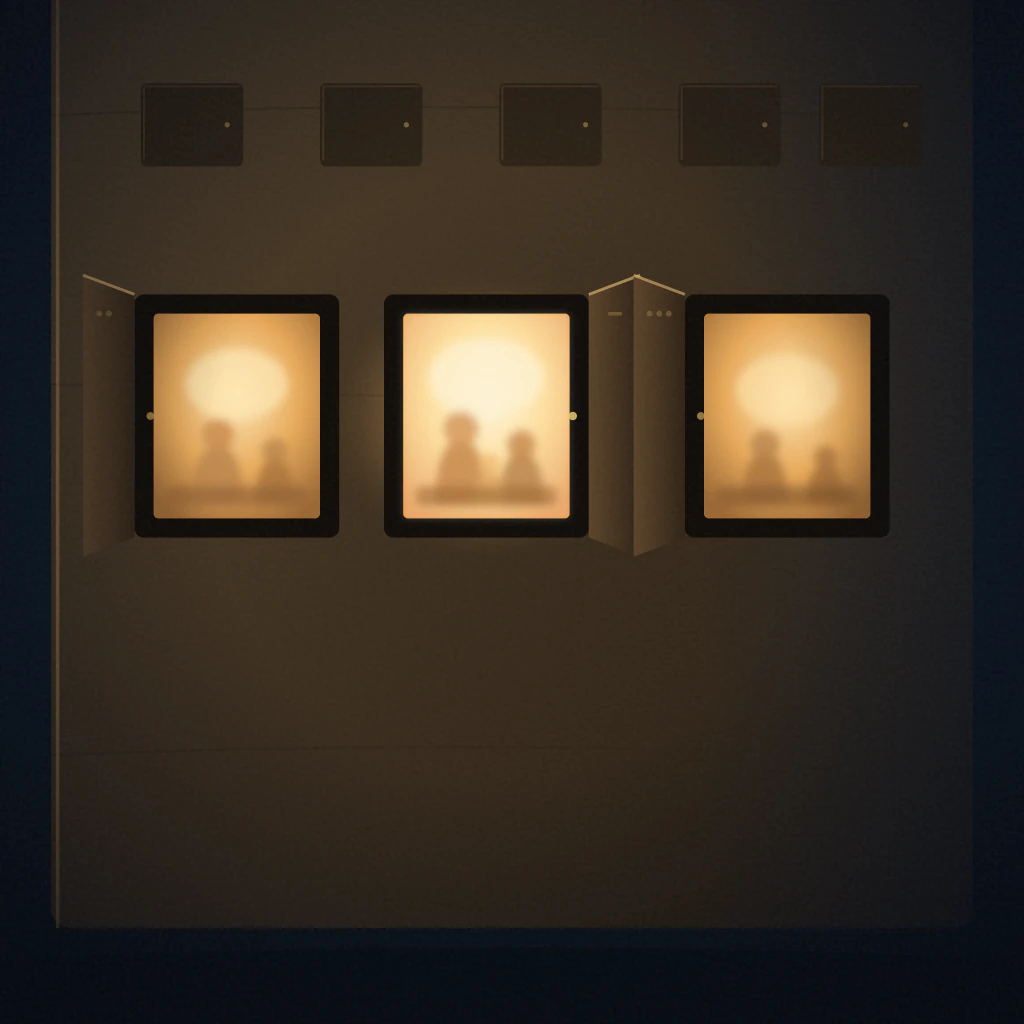
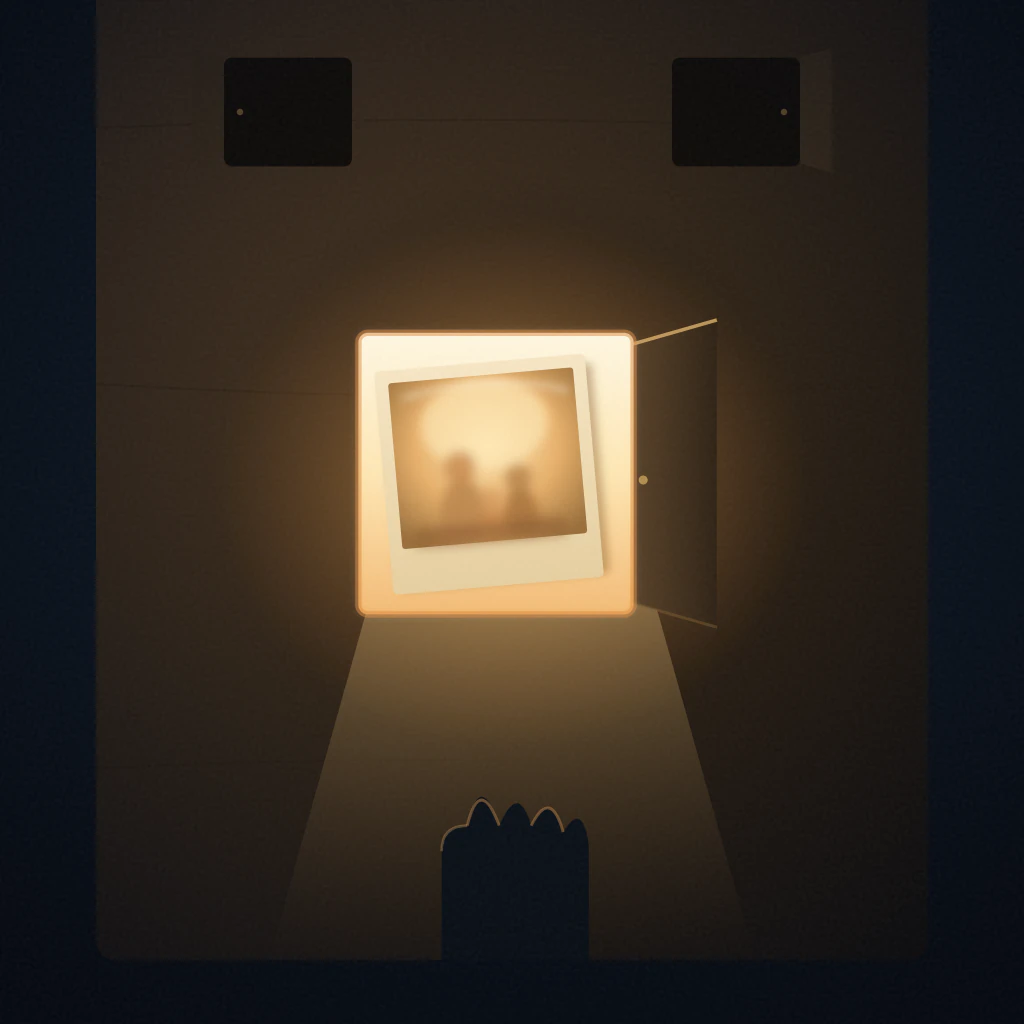
I opened it the way you touch something you are not sure is hot. Inside, in a little nest of warm light, lay a photograph no bigger than a postage stamp. It was soft and golden and hard to make out, the way a memory is hard to make out — three blurred shapes gathered close together, a brightness behind them that might have been a window, or a lamp, or the morning.

I knew the shapes were us. I can't tell you how; I just did. But it was not a photograph of a day we had lived. It was warmer than today, and later than today, and there was a greenness at its edge that our room did not have yet. It was a picture, I understood with a small cold thrill, of a day that had not happened. A photograph of tomorrow.

After that, every morning a new door was waiting. I would wake before the house and find another one grown into the old wood overnight, glowing softly, and behind it another tiny photograph held in warm light. A day ahead, always. Some were ordinary — a breakfast, a walk, a pile of leaves. I began to live each day twice: once in the little golden window, and once for real, watching it come true.

It was a wonderful and a frightening thing, to know a day before you had spent it. I never told anyone. I would stand at the calendar in my socks while the room was still blue and dark, opening tomorrow, and the row of little lit doors would look back at me like a street of warm windows, each with a day glowing patiently inside.

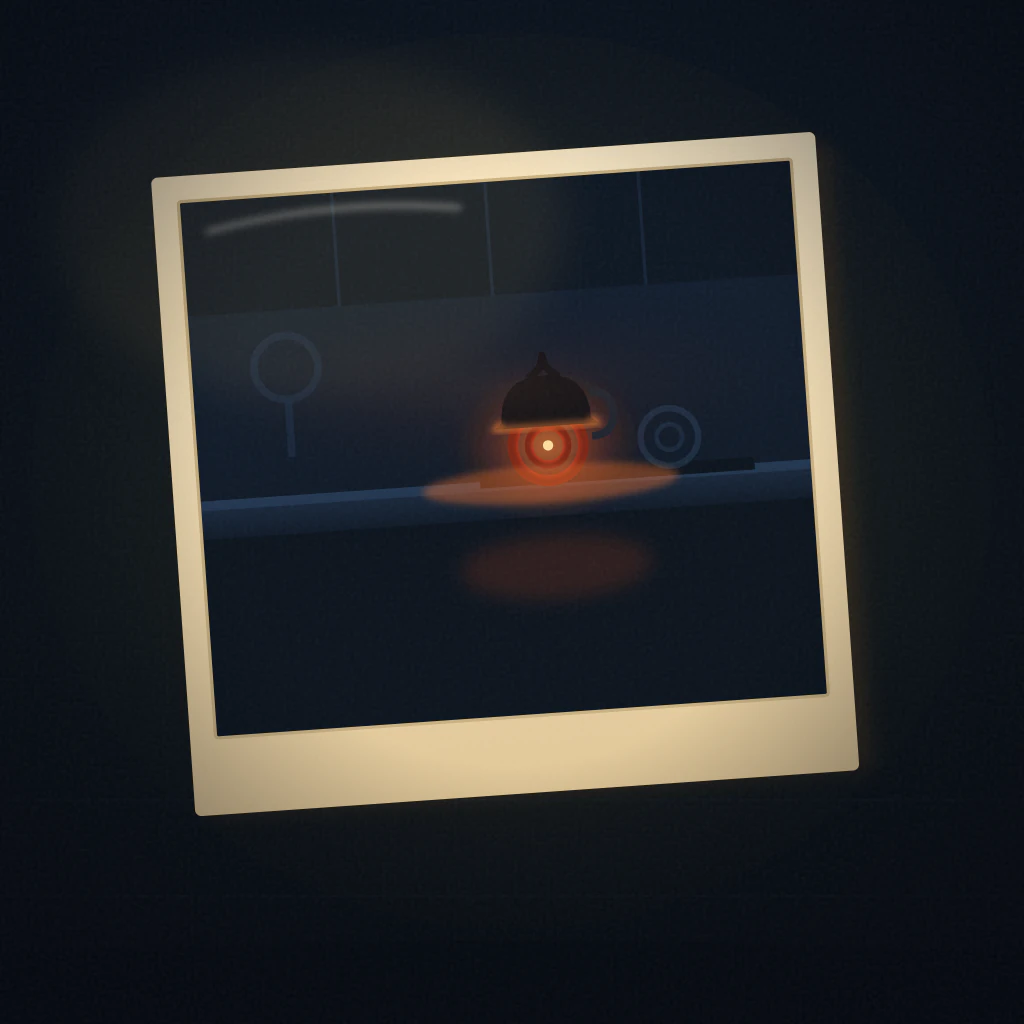
Then came the morning the photograph was wrong. It did not show a breakfast or a walk. It showed our kitchen in the middle of the night, dark and cold and empty — and on the stove, one ring left burning, a small round sun of red heat glowing where no one had meant to leave it, a kettle sitting quietly on top.

I didn't understand it, but I was afraid of it. All that day I watched the kitchen. And late that night, when the house was asleep, I crept down and found it exactly as the picture had promised: the kettle on, the ring glowing, the room cold around that one dangerous little warmth. I turned it off. The photograph had not been showing me tomorrow. It had been warning me.

The last door I opened did not hold a breakfast, or a walk, or a warning. It held a photograph of the calendar itself — this same old calendar, on this same wall, its little doors all open and spent. And at the very bottom, just below the twenty-sixth, a twenty-seventh door I had never seen, with the faintest new thread of warm light beginning to show around its edges.

I understood then that it would never really be finished. There would always be one more door, if I wanted it; always one more tomorrow waiting to be opened, warm and glowing and not yet lived. I stood a long time in the blue dark, my hand near the new little door, feeling it kindle. I have not decided yet whether to open it. Some mornings I think the nicest thing of all might be to let one day stay a surprise.